Exercise and Dementia: What It Can (and Can't) Do
Exercise won't cure dementia, but tailored, supervised activity can help people keep their strength, balance and independence. Here's what families should know.

Joe Nachar
Exercise Physiologist
3 min read
When someone you love is diagnosed with Alzheimer's disease or another form of dementia, it's natural to look for anything that might help. Exercise is often mentioned, and for good reason. But it helps to be clear about what exercise can and can't do, so you can set realistic goals and avoid false hope.
What exercise can do
Dementia affects more than memory. Over time, many people find that their strength, balance, walking and confidence change too. This can make everyday things harder, like getting up from a chair, using the stairs or going for a walk.
Regular, tailored exercise can help people living with dementia:
- keep their strength for standing, walking and getting in and out of chairs
- improve or maintain balance, which matters because people living with dementia have a higher risk of falls
- stay mobile and independent in everyday tasks for longer
- support their mood and sleep, and enjoy a sense of achievement
- stay connected, through shared, enjoyable activity with family, carers and others
Dementia Australia notes that exercise and physical activity can help with strength, balance and walking, and can help reduce falls. The World Health Organization also lists physical activity among the things that can support quality of life and daily functioning for people living with dementia.
What exercise can't do
There is no cure for dementia, and exercise is not a cure. Research on whether exercise slows memory decline is mixed, so be wary of any program that promises to reverse or stop dementia.
A better way to think about it: exercise helps keep the body as strong and capable as it can be. In a condition that changes over time, keeping the abilities someone has today is a meaningful result.
What kind of exercise helps most?
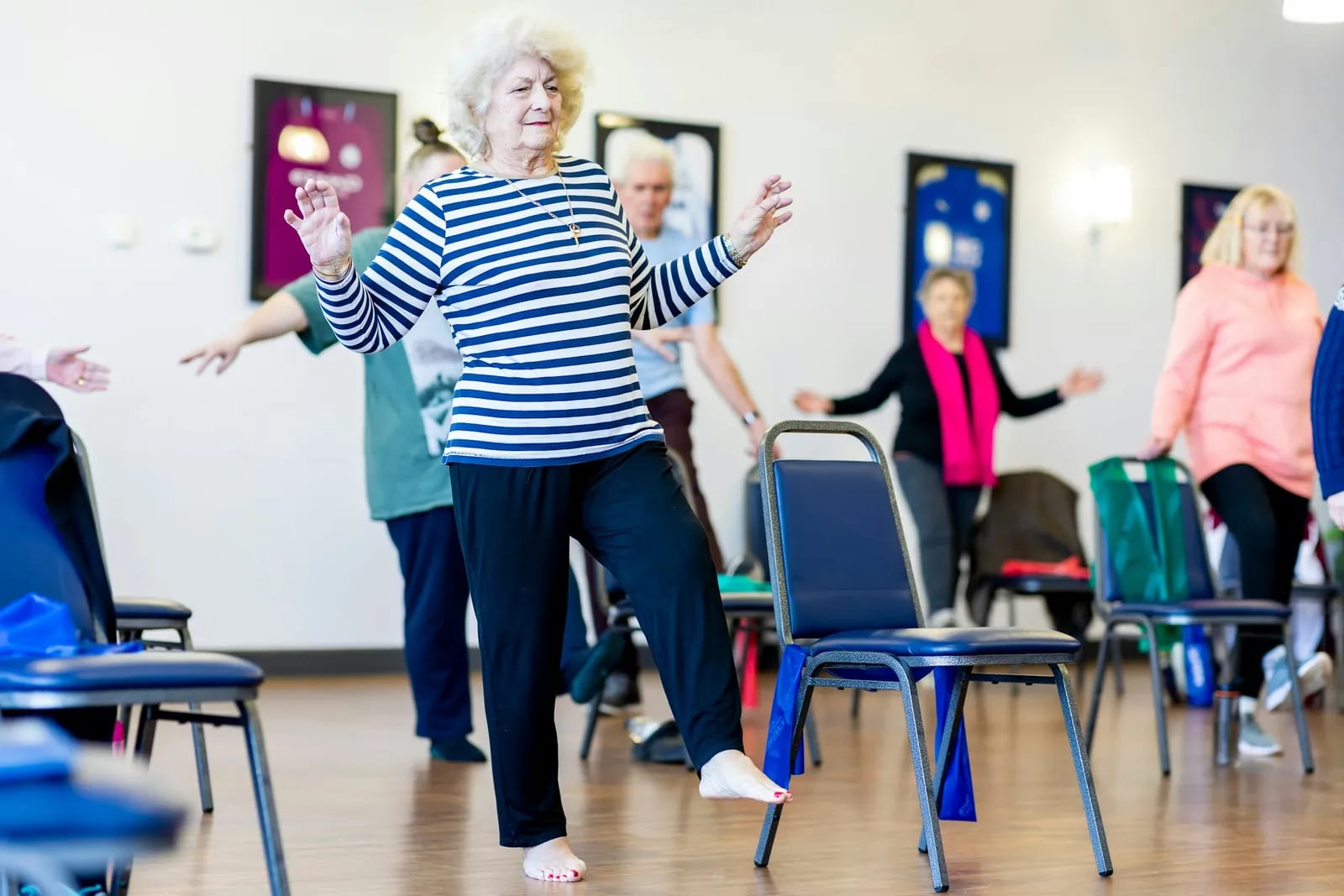
The best program is the one that suits the person and that they enjoy enough to keep doing. For most people living with dementia, that includes:
- Strength exercises, such as standing up from a chair, step-ups and light resistance exercises
- Balance exercises, such as supported weight shifts, reaching and turning
- Walking, at a comfortable pace, often with a familiar route or companion
- Movement with focus, such as reaching for coloured targets, passing a ball or moving to familiar music
Simple, familiar routines and one-step instructions usually work best. Short sessions are fine. The aim is safe, enjoyable movement, not testing memory or causing frustration.
Keeping it safe
- Talk to the GP before starting a new exercise program, especially if there are heart, lung or other medical conditions.
- Start gently and build up slowly.
- Stop and seek medical advice if there is chest pain or pressure, trouble breathing, dizziness or faintness, a racing or irregular heartbeat, or nausea. For severe chest pain or shortness of breath, call triple zero (000).
- A sudden change in confusion or behaviour can be a sign of delirium, which is a medical emergency. Don't assume it is just the dementia: get urgent medical help.
How MedPhys can help
An Exercise Physiologist can design a safe program around the person's abilities, health and goals, and adjust it as things change. Our Memory & Movement Program is a one-to-one, 12-week exercise program for people living with Alzheimer's disease and other forms of dementia, supervised by our Exercise Physiologist at our Concord West clinic. Families and carers are welcome to be part of every step.
To find out more, book an initial assessment online or call us on 0422 785 958.
This article is general information only and is not medical advice. Talk to your GP or treating team about your own situation.
Sources: Dementia Australia, Rehabilitation and physiotherapy for people with dementia; World Health Organization, Dementia fact sheet; healthdirect, Delirium and Physical activity guidelines for older people.